Categories
Book Recommendations Featured

What Behavioral Psychology Books Reveal About Why We Play Card Games for Money

A question runs through eight decades of behavioral psychology research, from B.F. Skinner’s pigeons to Daniel Kahneman’s Nobel Prize. Why do rational people repeatedly play games where the math guarantees they will lose? The answer isn’t stupidity, addiction, or poor self-control. The answer is that human brains are wired to find gambling neurochemically compelling in ways that rational analysis cannot override.

At least a dozen books published in the last 15 years have explored this question from different angles, and their conclusions converge on the same set of mechanisms. Dopamine rewards anticipation, not outcomes. Uncertainty amplifies the reward signal. Near-misses hijack the same brain circuitry as actual wins. And variable reinforcement schedules produce the most persistent behavior of any conditioning method ever tested.

This isn’t abstract neuroscience. These findings explain why 96% of online gamblers lose money according to 2025 survey data, and why the remaining 4% are largely statistical noise. They also explain why card games, with their blend of skill and chance, are uniquely positioned to trigger every one of these mechanisms simultaneously.

In this article
1. The books that reshaped how researchers understand gambling behavior
2. How dopamine, loss aversion, and near-misses create a neurochemical trap
3. Why card games activate these psychological mechanisms more effectively than any other format
4. What the research means for anyone who plays card games for real money

The Books That Rewired How We Think About Gambling

Three books published between 2011 and 2020 did more to change the public understanding of gambling psychology than the previous fifty years of academic research combined. Each approached the question from a different discipline, and each arrived at conclusions that reinforced the others.

Daniel Kahneman’s “Thinking, Fast and Slow” (2011) introduced prospect theory to a general audience. Kahneman and his late collaborator Amos Tversky demonstrated that people don’t evaluate gains and losses symmetrically. The pain of losing ₹100 is approximately twice as intense as the pleasure of gaining ₹100. This asymmetry, called loss aversion, creates a paradox. People who are loss-averse should avoid gambling entirely. Instead, prospect theory shows they overweight small probabilities of large wins while underweighting the near-certainty of small losses. The result is that a mathematically rational agent operating under prospect theory would still gamble, even when the expected value is negative.

Nicholas Barberis at Yale built on this framework in a 2012 paper modelling casino gambling behaviour through prospect theory. His model demonstrated that a gambler who evaluates outcomes through Kahneman and Tversky’s probability weighting function would enter a casino, set a target and a loss limit, and play until hitting one or the other. The behaviour looked irrational from the outside but was internally consistent with how the brain actually processes uncertainty.

Annie Duke’s “Thinking in Bets” (2018) approached the question from inside the game. Duke, a former professional poker player who left a PhD programme in cognitive psychology at the University of Pennsylvania, argued that “life is more like poker than chess.” Her central contribution was the concept of “resulting,” the tendency to judge decision quality by outcomes rather than process. A player who folds a strong hand and then sees that they would have won judges the fold as a mistake. Objectively, the fold was correct based on available information. But the brain doesn’t process it that way. Resulting is one of the cognitive errors that keeps players at the table long after rational analysis says to leave.

Maria Konnikova’s “The Biggest Bluff” (2020) took the most unusual approach. Konnikova, a Columbia PhD in psychology and New Yorker contributor, spent five years learning poker under the mentorship of professional player Erik Seidel. Her conclusion was that card games sit at the fulcrum balancing chance and control. Skill shows through over longer time horizons, but short-term variance dominates. Players consistently overestimate the degree of control they have over events, a finding that echoes Ellen Langer’s 1975 research on the illusion of control.

Essential Reading on Gambling Psychology
Verified books with real data and research credentials
Thinking, Fast and Slow
Daniel Kahneman (2011)
Prospect theory, loss aversion
Thinking in Bets
Annie Duke (2018)
Decision quality vs outcomes
The Biggest Bluff
Maria Konnikova (2020)
Skill vs chance balance
Fooled by Randomness
Nassim Nicholas Taleb (2001)
Pattern-seeking in noise
Behave
Robert Sapolsky (2017)
Dopamine and uncertainty
Hooked
Nir Eyal (2014)
Variable reward loops

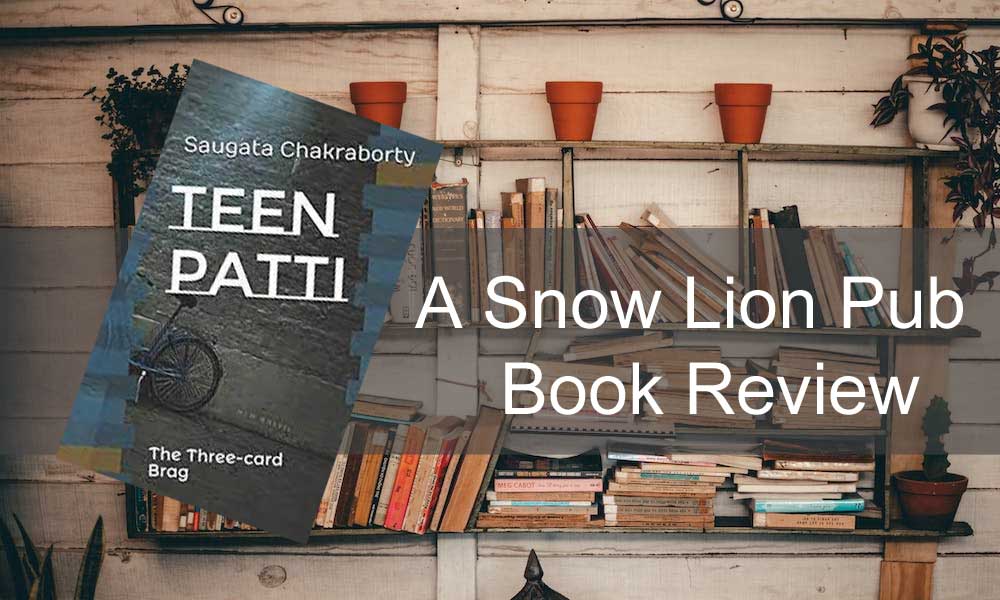
For a deeper look at how one of these games has been covered in published literature, our earlier review of Saugata Chakraborty’s “Teen Patti: The Three-Card Brag” explored the cultural and strategic dimensions that academic psychology often overlooks.

Why Your Brain Treats Almost-Winning the Same as Winning

Robert Sapolsky’s “Behave: The Biology of Humans at Our Best and Worst” (2017) contains one of the most cited findings in gambling neuroscience. Dopamine, the neurotransmitter most people associate with pleasure, is not actually about pleasure at all. It’s about the anticipation of pleasure. When Sapolsky’s research team studied primates, they found that dopamine fires most intensely not when the reward arrives but when the signal predicting the reward appears.

The gambling implication is immediate. When uncertainty is added to the equation (a 50/50 chance of reward versus a guaranteed one), twice as much dopamine is released. The brain doesn’t just tolerate uncertainty. It actively prefers it. Every time a card player looks at an unresolved hand, the brain is generating a dopamine response that a guaranteed outcome cannot match.

This finding connects directly to near-miss research published in Neuron (2009). Near-misses activate the same reward-related brain circuitry (the ventral striatum) as actual wins. In practical terms, almost winning a hand of Teen Patti or poker triggers a neurochemical response that is functionally similar to winning it. Research shows that near-misses increased the rate of gambling behaviour by approximately 30%, and the size of the dopamine response to near-misses correlates with the severity of gambling addiction.

The troubling extension of this finding involves loss processing. In pathological gamblers, losing money triggers dopamine release almost to the same degree as winning. The reward system stops distinguishing between positive and negative outcomes. Every result becomes reinforcing, which explains the phenomenon clinicians call loss-chasing, where a player increases their bets after a losing streak rather than reducing them.

How Variable Rewards Keep Card Players at the Table

B.F. Skinner’s operant conditioning research, conducted primarily in the 1950s and 1960s, established a finding that remains unchallenged across every species ever tested. Variable ratio reinforcement schedules produce the highest response rate and the greatest resistance to extinction of any conditioning method known.

Skinner himself was explicit about the connection. He noted that “the efficacy of such schedules in generating high rates has long been known to the proprietors of gambling establishments.” He also claimed he could turn a pigeon into a pathological gambler using variable reinforcement alone.

Card games are a near-perfect implementation of variable ratio reinforcement. The reward (winning a hand) arrives at unpredictable intervals. The size of the reward varies from hand to hand. And the extinction point, the moment where the player stops playing, comes very slowly because the brain maintains the belief that “one more hand” will produce the reward.

Nir Eyal’s “Hooked: How to Build Habit-Forming Products” (2014) updated Skinner’s framework for the digital age. Eyal’s Hook Model (Trigger, Action, Variable Reward, Investment) maps precisely onto modern card game apps. A push notification triggers the behaviour. Opening the app is the action. The hand’s outcome is the variable reward. And the time invested in learning the game, building a bankroll, and climbing leaderboards is the investment that makes leaving feel costly.

Eyal writes that introducing variability “multiplies the effect, creating a frenzied hunting state” that activates brain areas associated with wanting and desire. This is not metaphor. The fMRI data backs it up. Variable schedules of reward are among the most powerful tools for sustaining behaviour ever documented, and card games deliver them with an efficiency that Skinner’s pigeons never experienced.

★★★★★

The convergence across these books is striking. Kahneman explains why we misjudge probabilities. Sapolsky explains why uncertainty feels rewarding. Skinner explains why intermittent wins sustain behaviour indefinitely. And Konnikova explains why card games, specifically, activate all three mechanisms at once. No single book captures the full picture, but read together, they form one of the most complete explanations of human gambling behaviour available outside of academic journals.

SL
Snow Lion
Behavioral science book reviewer
Hands holding three face-down playing cards at table with poker chips showing moment of decision
The moment before looking at your cards produces more dopamine than the reveal itself

Why Card Games Trigger These Mechanisms More Than Slots or Roulette

Not all gambling formats are created equal in terms of psychological grip. The research literature distinguishes between “pure chance” games (slots, roulette, lottery) and “mixed” games (poker, Teen Patti, blackjack) that combine chance with strategic decision-making. The mixed format is more psychologically potent, and the reason traces back to Ellen Langer’s foundational 1975 paper on the illusion of control.

Langer demonstrated that people interpret skill-associated elements in chance-based situations as evidence that they have influence over outcomes. Card games are saturated with skill-associated elements. Players choose when to bet, how much to bet, whether to fold or continue, and whether to play blind or look at their cards. Each of these decisions feels consequential. The behavioural consequence is measurable. Players with a stronger illusion of control place larger bets and play for longer sessions.

Mihaly Csikszentmihalyi’s “Flow: The Psychology of Optimal Experience” (1990) adds another dimension. Flow states, those periods of total immersion where time disappears and self-consciousness fades, require a specific balance between challenge and skill. Too easy and the player gets bored. Too difficult and anxiety takes over. Card games occupy the exact centre of this range because the blend of skill and chance constantly recalibrates the challenge level. A player can study strategy for years and still lose any individual hand to a beginner. That tension sustains flow.

Researchers have identified a darker variant called “dark flow,” described in a 2022 paper published in Frontiers in Psychology. Dark flow states are absorbing but ultimately destructive. The player loses track of time and money simultaneously. Machine gamblers (slots, video poker) achieve this state regularly, but card games produce a more complex version because the illusion of control adds a layer of perceived agency that pure-chance games lack.

The sunk cost fallacy compounds the effect. An fMRI study found that the sunk cost bias, the tendency to continue investing because of prior costs even when future costs exceed benefits, is equally present in both gambling disorder patients and healthy controls. This is a universal cognitive vulnerability, not a symptom of pathology. Once a player has invested time learning the rules and money building a bankroll, leaving the table feels like wasting that investment. The brain treats departure as a guaranteed loss, which prospect theory tells us feels twice as painful as an equivalent gain.

What These Books Mean for Anyone Playing Card Games Online

The literature doesn’t argue that playing card games is inherently destructive. Duke and Konnikova both found genuine cognitive benefits from strategic card play, including improved emotional regulation, better probabilistic thinking, and a more honest relationship with uncertainty. The danger isn’t the game itself. It’s playing without understanding the psychological forces acting on your decisions.

Several practical frameworks emerge from the research. First, set financial limits before sitting down, not during play. Kahneman’s work shows that in-the-moment decisions are governed by System 1 (fast, emotional, pattern-seeking) rather than System 2 (slow, analytical, calculating). Pre-commitment is the only reliable defence against dopamine-driven decision-making.

Second, track results honestly. Duke’s concept of “resulting” explains why most players have a distorted picture of their performance. They remember big wins vividly and rationalise losses as bad luck. Keeping a simple record of deposits, withdrawals, and net outcomes over a three-month period will tell most players more about their actual performance than their subjective memory ever will.

Third, choose platforms carefully. The psychological vulnerabilities described in these books are amplified by platforms designed to exploit them and reduced by platforms designed to support informed play. For players interested in Teen Patti specifically, the difference between a predatory platform and a legitimate one often comes down to withdrawal transparency, game fairness certification, and whether the operator profits from player losses or from facilitating fair play. Players looking to find trusted platforms to play Teen Patti for real money online need to apply the same analytical rigour that Kahneman and Duke advocate for every other decision under uncertainty.

Fourth, recognise the near-miss trap. Awareness alone reduces its power. Research published in the Journal of Neuroscience found that understanding the near-miss mechanism doesn’t eliminate the dopamine response, but it does improve the ability to override it with conscious decision-making. Reading about it is the first step. Recognising it at the table is the second.

The economic framing from research on sports betting and lottery industries reinforces this point. The house always has a mathematical edge. Understanding that edge, accepting it, and playing within pre-set limits is the only framework these books collectively endorse for recreational card play.

📖
Reading order recommendation

Start with “Thinking in Bets” by Annie Duke for the most accessible introduction to decision-making under uncertainty. Move to “Thinking, Fast and Slow” by Kahneman for the theoretical foundation. Then read “The Biggest Bluff” by Konnikova to see the theory applied inside an actual card game. “Behave” by Sapolsky fills in the neuroscience. “Fooled by Randomness” by Taleb challenges assumptions about skill that survive the first four books.

The Numbers Behind the Psychology

The aggregate data from gambling research puts the mechanisms described above into economic perspective.

96% of online gamblers lose money over time. This isn’t an estimate or an opinion. It’s the mathematical consequence of house edges that range from 0.5% in blackjack (with optimal strategy) to over 5% in games like Caribbean Stud Poker and Three Card Poker. Teen Patti, played at casinos with live dealers, typically carries a house edge in the range of 3 to 4%.

The distribution of losses is uneven. In live casinos, 5% of players account for 70 to 74% of total casino revenue. In virtual casinos, that concentration is even more extreme. The top 5% of accounts by stake size generate 82% of platform revenue. These numbers suggest that the psychological mechanisms described in this article operate with disproportionate intensity on a relatively small group of players.

Gambling disorder affects between 1 and 3% of adults globally. Approximately 2.5 million American adults experienced severe gambling problems in 2024. Up to 20 million more are classified as at-risk. The literature is clear that the line between recreational play and problematic play is crossed not through a single decision but through the cumulative effect of the same psychological mechanisms that make the game appealing in the first place. Dopamine, loss aversion, variable reinforcement, and the illusion of control are features of healthy brains operating normally. They become problematic only when the environment (in this case, the game and the platform) amplifies them beyond the player’s ability to self-regulate.

The Economics of Gambling Psychology
What the aggregate data reveals
Online gamblers who lose money over time 96%
Loss aversion ratio (Kahneman) 2:1
Dopamine increase under uncertainty (Sapolsky) 2x baseline
Near-miss effect on gambling rate +30%
Casino revenue from top 5% of players 70-74%
Adults affected by gambling disorder 1-3%

Frequently Asked Questions

Why do people continue gambling even when they know the odds are against them?

The brain’s dopamine system rewards anticipation and uncertainty, not just positive outcomes. Research by Robert Sapolsky showed that uncertain rewards produce twice the dopamine response of guaranteed ones. This means the act of placing a bet is neurochemically rewarding regardless of the result, which is why rational knowledge of the odds doesn’t override the impulse to play.

What is loss aversion and how does it apply to card games?

Loss aversion, documented by Kahneman and Tversky, is the finding that the psychological pain of losing money is approximately twice as intense as the pleasure of gaining the same amount. In card games, this creates loss-chasing behaviour where players increase bets after losses in an attempt to recover, rather than accepting the loss and walking away.

What makes card games more psychologically compelling than slot machines?

Card games involve strategic decisions (when to bet, fold, bluff, or play blind) that create an illusion of control over outcomes. Ellen Langer’s 1975 research demonstrated that skill-associated elements in chance-based situations lead to higher bets and longer sessions. Slot machines offer no strategic decisions, which reduces the illusion of control but also reduces the psychological engagement.

Which book should someone read first to understand gambling psychology?

“Thinking in Bets” by Annie Duke is the most accessible entry point. It’s written by a former professional poker player with academic training in cognitive psychology, and it frames decision-making under uncertainty in practical terms that apply beyond gambling. For the theoretical foundation, follow it with Kahneman’s “Thinking, Fast and Slow.”

Is gambling addiction caused by the games themselves or by individual vulnerability?

The research suggests it’s both. The psychological mechanisms (dopamine response, near-miss effect, variable reinforcement) operate in all healthy brains. Gambling disorder develops when environmental factors, including game design, platform accessibility, and lack of safeguards, amplify these mechanisms beyond a specific individual’s capacity for self-regulation. The sunk cost bias, for example, is equally present in people with and without gambling disorders.

Can understanding these psychological mechanisms actually help someone gamble more responsibly?

Yes, with limitations. Research published in the Journal of Neuroscience found that awareness of the near-miss mechanism doesn’t eliminate the dopamine response but does improve the ability to override it with conscious decision-making. Pre-commitment strategies (setting limits before playing), honest record-keeping, and platform selection based on fairness certification are practical applications of the research that demonstrably reduce harm.

Categories
Book Recommendations

A Multifaceted Exploration of Teen Patti: Reviewing Saugata Chakraborty’s “Teen Patti: The Three-Card Brag”

Introduction

“Teen Patti: The Three-Card Brag” by Saugata Chakraborty provides a unique multifaceted look into the popular Indian card game Teen Patti. Unlike a typical gaming guide, this book approaches Teen Patti through a collection of three fictional stories, each analyzing the game from a different perspective. It serves as an in-depth narrative exploration of Teen Patti, touching on its cultural significance, psychological elements, and emotional resonance in players’ lives.

Key Takeaways

Key TakeawayDescription
Narrative DepthThe book goes beyond being a simple guide to Teen Patti, offering a narrative exploration that delves into human emotions and relationships.
Multi-Story StructureThe book is a collection of three stories, each contributing to a multifaceted understanding of the game.
Psychological and Emotional LayersThe central story explores themes like lust, greed, and unrequited love, adding psychological and emotional depth to the game of Teen Patti.
Unique ApproachUnlike typical Teen Patti guides, this book offers a narrative that could provide insights into the game’s cultural and psychological aspects.

About the Author

As a relatively new name in literature, Saugata Chakraborty brings a fresh take on the subject of Teen Patti. While not much is publicly known about Chakraborty’s other literary works, this book demonstrates his adept storytelling skills and ability to dissect a game to its core.

The Book’s Structure

Spanning 48 pages, the book contains three separate stories, using each one to highlight a distinct aspect of Teen Patti. This format provides a multifaceted analysis of the game rather than just a straightforward guide to rules and strategy.

The Central Story: ‘Teen Patti’

The main story follows Police Detective Sutanu Deb as he investigates a horrific crime, all set against the backdrop of a high-stakes Teen Patti game. The narrative delves into themes of lust, greed, pride, and unrequited love, tying them back to the central game of Teen Patti.

Beyond the Game: Themes Explored

Chakraborty uses the story to explore deeper human themes that extend beyond Teen Patti as just a card game. The characters’ choices and emotions showcase the complexity of relationships and humanity’s vices like greed.

Narrative Style and Writing

Utilizing a gripping narrative style, Chakraborty keeps readers engaged throughout. His descriptive language and unexpected plot twists add depth and intrigue to the story and characters.

The Other Stories

While the main detective story takes center stage, the other two stories provide additional perspectives on Teen Patti. All three complement each other in analyzing the game from different angles.

Modern Interpretations of the Game

Though it does not directly discuss Teen Patti’s modern online variations, the book’s examination of human psychology provides relevant insights into the game’s popularity in online casinos. The emotions explored likely apply to online and in-person players alike. For a deeper look at how published research in behavioral psychology explains why card games hold such power over players, the science behind these emotional responses is well documented across several major books.

Audience and Reception

With its unique narrative approach, the book appeals to those interested in Teen Patti, storytelling techniques, or human psychology. While specific reception data is limited, the inventive take on a classic game makes for an intriguing read.

Conclusion

Through an unconventional collection of fictional tales, Saugata Chakraborty’s “Teen Patti: The Three-Card Brag” analyzes the cultural icon of Teen Patti in a fresh, multifaceted way. Looking beyond just gameplay, it provides a rich exploration of the game’s emotional and psychological hold on players. For any reader seeking insights into Teen Patti beyond the rules, this book offers an immersive experience.

FAQ

What is the book “Teen Patti: The Three-Card Brag” about?

The book is a collection of three stories that explore different facets of the game Teen Patti.

How does this book differ from other Teen Patti guides?

Unlike typical guides, this book offers a narrative exploration of the game, delving into its emotional and psychological aspects.

Where can I buy “Teen Patti: The Three-Card Brag”?

The book is available through Amazon Digital Services LLC – KDP Print US.

Categories
Book Recommendations Papers

The Nigerian Sports Betting and Lottery Industry: A Panacea for Economic Development?

Nigeria’s sports betting and lottery industries have seen exponential growth over recent years, as more people engage in these activities. Some observers have speculated that sports betting and lotteries could provide a solution for Nigeria’s economic difficulties. Alarape, Adewale and Agbede’s article entitled, “The Nigerian Sports Betting and Lottery Industry: A Panacea for Economic Development,” explores this idea further and asserts that sports betting and lotteries in Nigeria could act as an agent for economic development. We will critically review their arguments, evidence and conclusions to ascertain if their claims can indeed be supported as well as which Nigerian bookies offer competitive odds while considering how this impacts the Nigerian economy.

Main Arguments and Supporting Evidence

This article’s central thesis is that Nigeria’s sports betting and lottery industry can contribute significantly to economic development by creating employment opportunities, raising government revenue and encouraging entrepreneurship. For this argument, the authors rely on various statistics and studies, including one by PriceWaterhouseCoopers that predicts industry revenue to surpass 3 billion USD by 2025. They highlight how the industry has already created jobs and drawn investment, such as Bet9ja – one of Nigeria’s premier bookies. According to them, growth of this sector will only continue if government creates an enabling environment through regulatory policies.

Contrarian Arguments and Alternate Perspectives

Although the authors make an eloquent argument in support of sports betting and lottery industries, they fail to address all their potential social and ethical repercussions. Critics contend that gambling addiction among vulnerable populations may increase while it also encourages instant gratification over hard work or merit, and is exploitative as it takes advantage of people seeking escape poverty and financial insecurity; yet while briefly acknowledging such concerns the authors don’t fully address or offer alternative viewpoints.

Strengths and Weaknesses

The authors’ argument is strengthened by its use of statistics and evidence. They present a comprehensive view of the industry and its potential economic impacts by citing various studies and reports, while providing specific examples of how job creation and revenue generation have already occurred due to it. Unfortunately, however, their argument is undermined by limited consideration given to potential social or ethical ramifications, counterarguments, or alternate points of views that exist – making their position weaker overall than its opponents.

Implications for Future Research and Policy

The authors’ article serves as an excellent starting point to assess the potential of Nigeria’s sports betting and lottery industry, but further research must be conducted in order to fully grasp both its impact on economic performance as well as any resulting social or ethical ramifications. Future studies could explore alternative perspectives and counterarguments, such as the impact of industry on vulnerable populations or its potential for exploitation. Policy-wise, the government could adopt regulations and policies that promote responsible gambling while protecting vulnerable populations while still permitting the industry to grow. Government can collaborate with industry to ensure that Nigeria’s best bookies operate ethically and fairly, offering customers competitive odds while creating an enjoyable gambling experience that encourages greater participation. Doing this would build trust within the sector while encouraging more people to join sports betting or lottery activities.

Conclusions

Alarape, Adewale and Agbede present compelling arguments to demonstrate the potential of sports betting and lottery industries to advance Nigerian economic development. Though their arguments are supported by evidence and statistics, it’s essential to remember the potential social and ethical ramifications of this industry as well as recognize the role bookies in Nigeria play in its success and impact on the economy. Further research must be undertaken in order to fully assess the industry’s effects, while policymakers should work alongside industry representatives to promote responsible gambling and protect vulnerable populations. If managed ethically and responsibly, gambling could prove invaluable in driving Nigeria’s economic development forward.

Categories
Book Recommendations

Best Books On Sustainable Home Designs

As individual contribution to protecting the planet and solving the climate change crisis, the most important change you can make is at your home.

If you’re looking to make a significant change, take a holistic approach to a green lifestyle. By holistic, everything should work together flawlessly for a sustainable system.

To do this, start with your home. Invest in a green home or renovate your home to be sustainable.

Green Home Building

A green home is a structure that is environmentally friendly and energy efficient. It makes good use of resources and has a near-to-zero carbon imprint. From the time of its construction to daily activities, everything or almost all aspects of the green home should incorporate sustainable living.

Considerations When Building a Green Home

To make your home sustainable, here are several factors to consider:

  • Environment-friendly building construction materials
  • Energy-efficient heating and cooling systems
  • Energy generation using solar and wind power
  • High-performance doors and windows
  • Smart home appliances and lighting
  • Highly efficient plumbing fixtures
  • Reuse and recycle methods
  • Smart drip irrigation system

A good example of what a sustainable home should be like is Unika Stenhus. A leader in sustainability, one of Sweden’s most unique stone villas, Unika Stenhus is unique, flexible, and designed with energy-efficient features at the top of mind.

This home design by architect SAR Ola Torrång can be scaled easily depending on your family’s size. It can be upsized conveniently when the need arises, and it can be downsized too. All this you can do without any massive renovation projects that can cost an arm and a leg.

Unika Stenhus features excellent insulation. It has a passive design that is oriented to take optimal advantage of solar energy for heating during the colder season and cooling during the warmer season. With its concrete construction, it can last up to a 100-year lifetime with very minimal maintenance requirements.

 The ultimate goal of a sustainable home is to create a living space that improves energy and water efficiency with reduced carbon and energy waste.

Guide Books for Sustainable Home Building

When undertaking sustainable home construction, careful consideration and planning are required. Seek out a sustainability expert to jumpstart the sustainability process of your home.

In addition, you can check out these bestseller books on sustainable house designs to get information and inspiration:

  • 150 Best Eco House Ideas by Marta Serrats

If you’re looking for inspiration for new sustainable home construction, then this book by Marta Serrats is perfect. It features an extensive collection of green homes and designs complete with drawings, floor plans, and tons of photographs.

  • Sustainable Home Design – A Complete Guide to Goals, Options, and the Planning Process by Chris Magwood

This comprehensive guide on sustainable home design by Chris Magwood is worth a read whether you’re self-building or hiring a contractor. An interesting feature of this book is its end-chapter grading system for sustainability to give you more insights if you’re on the right track.

  • Sustainable Home Refurbishment: The Earthscan Expert Guide to Retrofitting Homes for Efficiency by David Thorpe

For an authoritative reference that’s also practical, this book by David Thorpe is a good guide. It is simple and well researched, complete with references. The information provided in this book is ideal for the UK demographics.

  • Green Home Building: Money-Saving Strategies for an Affordable, Healthy, High-Performance Home by Miki Cook and Dough Garrett

The go-to guide to achieving an energy-efficient home, this book debunks the common myth that a sustainable home is expensive. The authors’ expertise in eco-green building and applied building science allow them to give money-saving strategies and techniques for building a green home.

  • Eco House Book by Terrence Conran

This book focuses on retrofitting an existing home to become more sustainable. Although the author’s insights are applicable to home construction, this book provides an extensive variety of small and large-scale sustainable changes.   

Advantages of a Green Home

A sustainable home helps reduce carbon footprints. It’s a step towards recovering from the climate change crisis. Having a green home also poses a lot of advantages for you as a homeowner, and these include:

  • Higher property market value
  • Cost-effective energy bills
  • Increased lifetime structure durability
  • Comfortable and healthier living for the entire family
  • Tax credits and incentives from the government

Building a sustainable home or retrofitting an existing home has multifaceted advantages. On the one hand, you are contributing to the planet’s healing, and you’re also reaping economic and comfort living benefits. To get started on this journey, make sure to explore your options and get a feel of what works for you and your family.